Roadmaps that actually land
I'm a big believer in tailoring roadmaps to your audience, so I'll often have a few different versions depending on who's in the room.
For higher leadership, I keep things at a bird's-eye view: product vision, strategy, and a high-level "Now / Next / Later" breakdown of features. The focus is on problems to be solved and rough horizons for when things will come to fruition. This audience thinks in strategy, not tactics, so I don't get into the weeds.
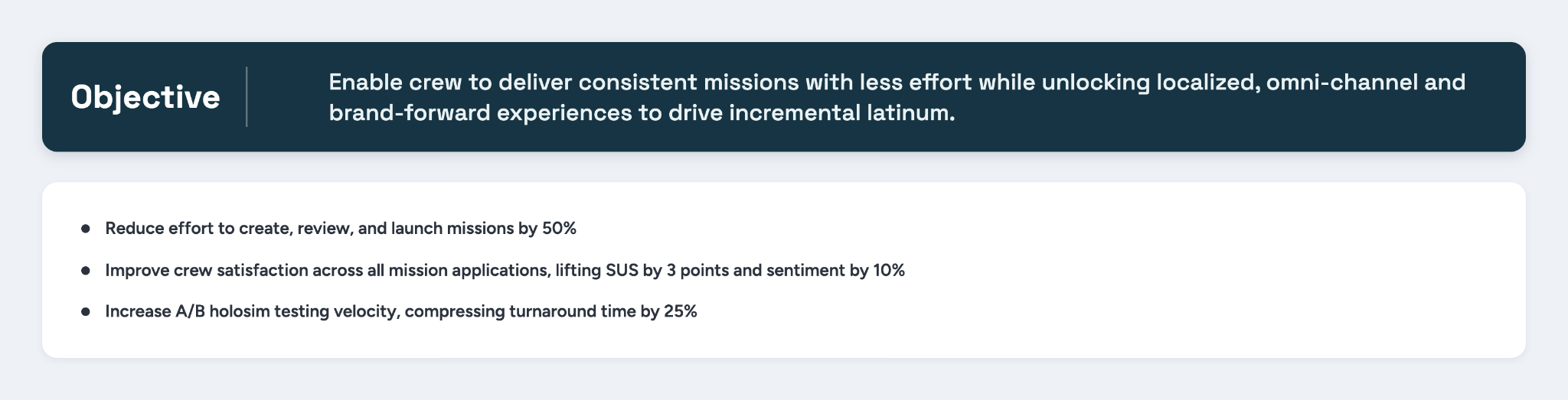
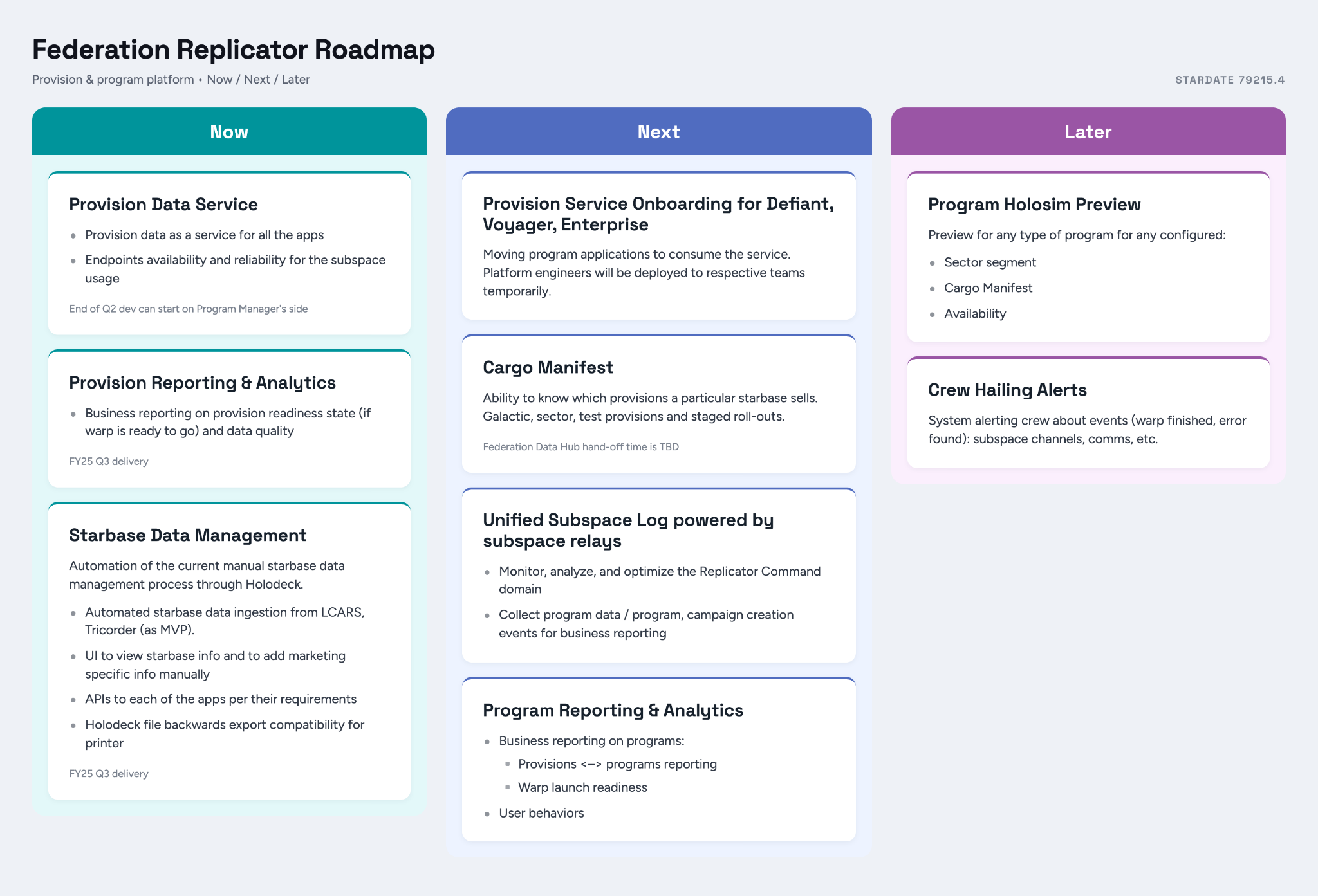
*Note: my roadmaps for this type of stakeholder look like this one, but obviously, I got some Star Trek lingo there instead of real systems and products.
If I am on a team that handles requests across multiple initiatives and spans multiple spheres of the company's interests, then I need to showcase that.
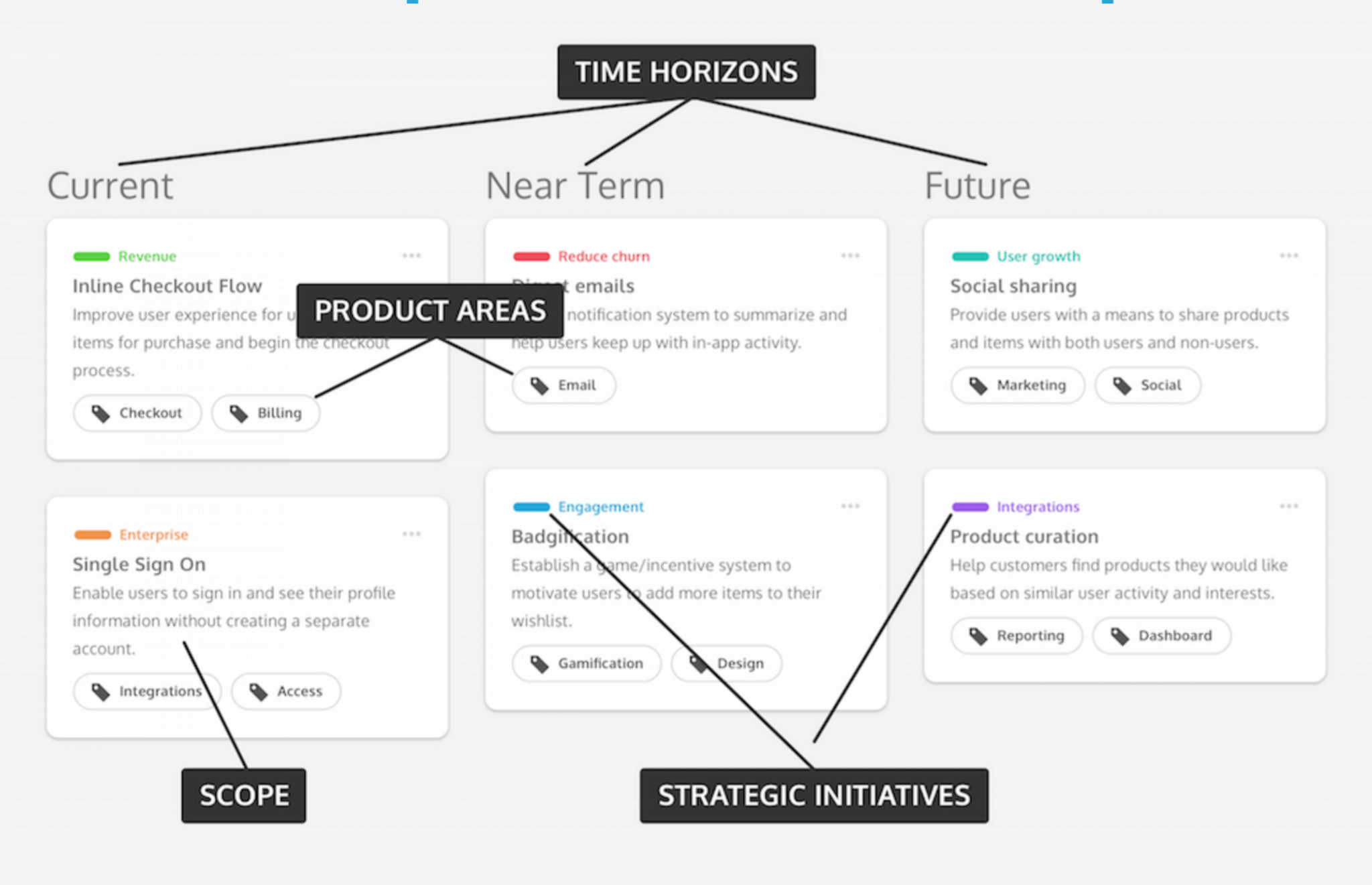
I also like to pair the roadmap with a card for each initiative. Each card lays out the opportunity, how we're planning to tackle it, and the Goals & Success Metrics (OKRs / KPIs), handy for anyone who wants to dig deeper into a particular problem space.
For neighboring teams, more detail is needed: stage of development, specifics on each feature, that sort of thing. They care about everything leadership cares about, but they also need enough tactical coverage to figure out whether they need to contribute and how.
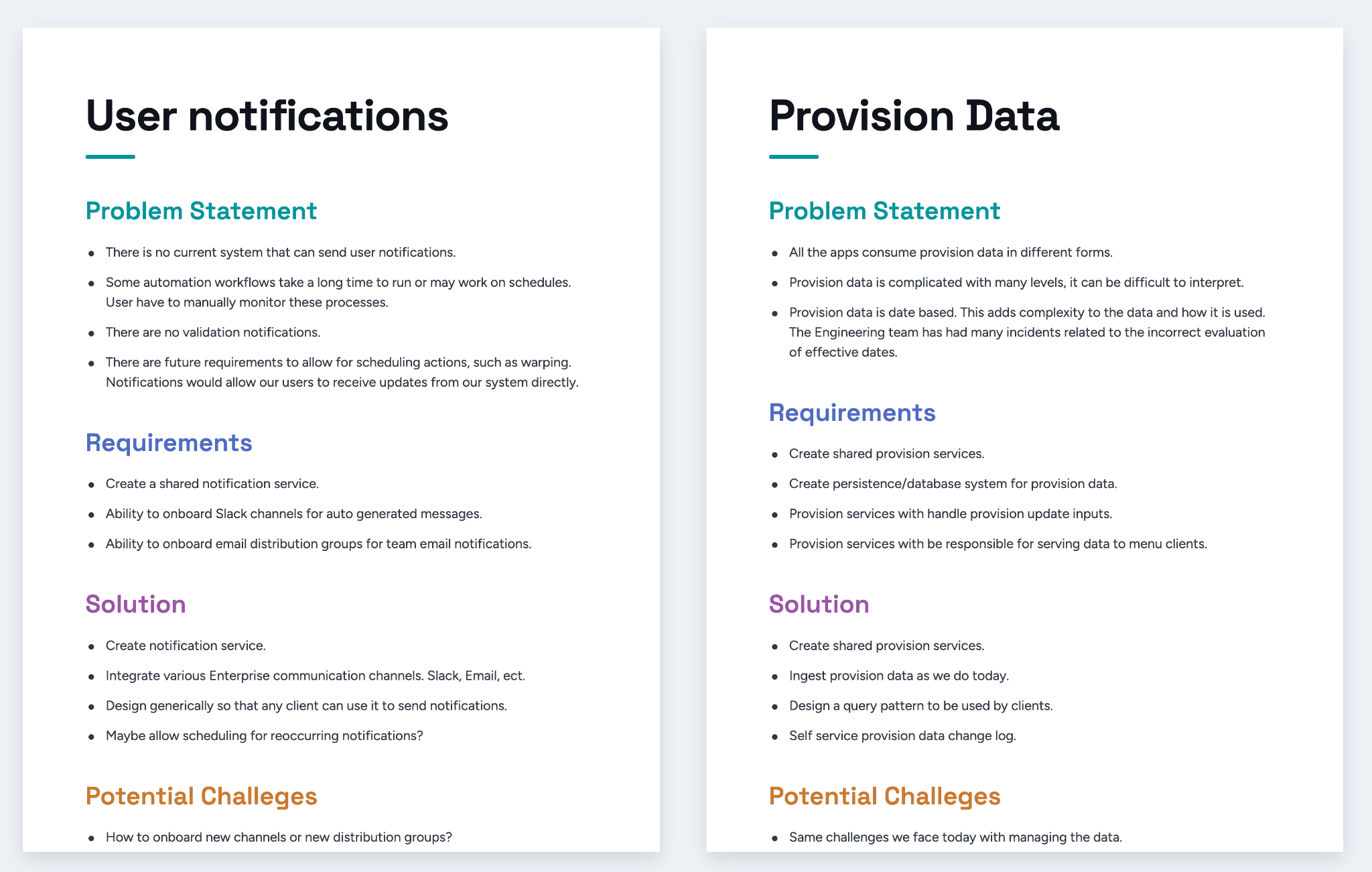
* Some Star Trek lingo again.
Finally, some teams that depend directly on product delivery may need a project plan. This gives them what they need to work in parallel, whether that's preparing to integrate or updating their own processes by the time my team is ready. A project plan isn't typically built for the whole roadmap, though; it covers just the "Now" portion, so everyone can track what's actually in flight.
Post a comment